In sixth grade I read more books than any other student at Monroe Elementary School, and the prize for this was a costume. I dressed up as The Bookworm and they sent me around the district to read aloud to elementary classrooms, an 11-year-old evangelist for the printed page, and I took the assignment very seriously. I’ve essentially been doing the same job ever since, with considerably less felt and snaps involved. I was a nerd of the first order and I still am.
The love of books predates the costume. As soon as I understood what letters were for, and how they could be rearranged into so many beautiful words, that was it; I was in, permanently, and five decades later nothing has dislodged it.
That’s why the numbers get to me. On an average day in 2005, about 27% of Americans read something for pleasure. By last year that was down to just over 16%. Time spent fell too: 16 minutes a day now, against 23 a decade ago. The figures come from the Bureau of Labor Statistics, which tracks how Americans actually spend their hours rather than how they’d like to be seen spending them, so there’s no flattering ourselves here.
I’m not going to wag a finger about it, partly because nobody has ever been lectured into reading a novel. But I’ll say the obvious thing, which is that reading makes you smarter, more well-rounded, more curious, and that these are not small returns on your precious time.
But, loving language and being insufferable about language turn out to be adjacent conditions, and I’ve had my years in the second category as your resident grammarian.
My current grievance is literally. Something has happened to that word in American English (and less so in British English). The strange part is what’s changed about the complaint. It used to be that the pedants had a clean target: people were using literally to mean its opposite, figuratively, and you could tut at that with a clear conscience. These days, as far as I can tell, people are mostly using it correctly. They’re just using it constantly.
This is mainly a younger phenomenon, localized stateside and not so common with my Thai students who speak English as a second language. Somewhere in there’s a lesson about what happens when a living language keeps moving after you’ve settled on your preferences. Guarding a language is a thankless hobby and not much fun. Playing with one is better.
Which brings me to the puzzle.
I love the New York Times Spelling Bee with an intensity that might embarrass me if I thought about it too long. It arrives here at 2pm during daylight saving time and 3pm during standard time, a twice-yearly reminder that the U.S. continues to do absurd and unhealthy things with its clocks. The other day I reached Queen Bee in 47 minutes, close to a personal record, and I was as pleased with myself as I have been about anything in recent memory.
The best part isn’t the solving. It’s that my friend G and I talk strategy like two people with a system. How many times you repeatedly hit the shuffle button, hoping that if you scramble the letters often enough your brain will catch the pangram out of the corner of your eye. It almost works. Sometimes it does work, which is worse, because it keeps us doing it.
This is where the old impulse went, I think. The same instinct that once wanted to correct your grammar now wants to find every word hiding in seven letters before dinner. Precision as a game instead of a judgment. Nobody gets scolded; you just get to be delighted.
The puzzle is seven letters and a shuffle button. It hands me three quarters of an hour (on a good day) of pleasant friction and a small flush of competence, and then it’s finished and tomorrow there’s another one. It scratches an itch.
The other thing is what happened to me at Monroe Elementary long before anybody handed me a costume, and what still happens most nights: you open a book and you are somewhere else, inside another person’s head, for as long as you can keep your eyes open. No word game has ever managed that. The Spelling Bee makes me feel clever, which is pleasant and worth very little. A book transports me and occasionally rearranges me, which is a preposterous bargain, and it’s why the declining number of readers bothers me far more than the overuse of an adverb.
So: pick up a book. I’m obliged to say it; they gave me the costume and never did ask for it back, and this is the same errand they sent me out on at Monroe Elementary. The district is just bigger now.
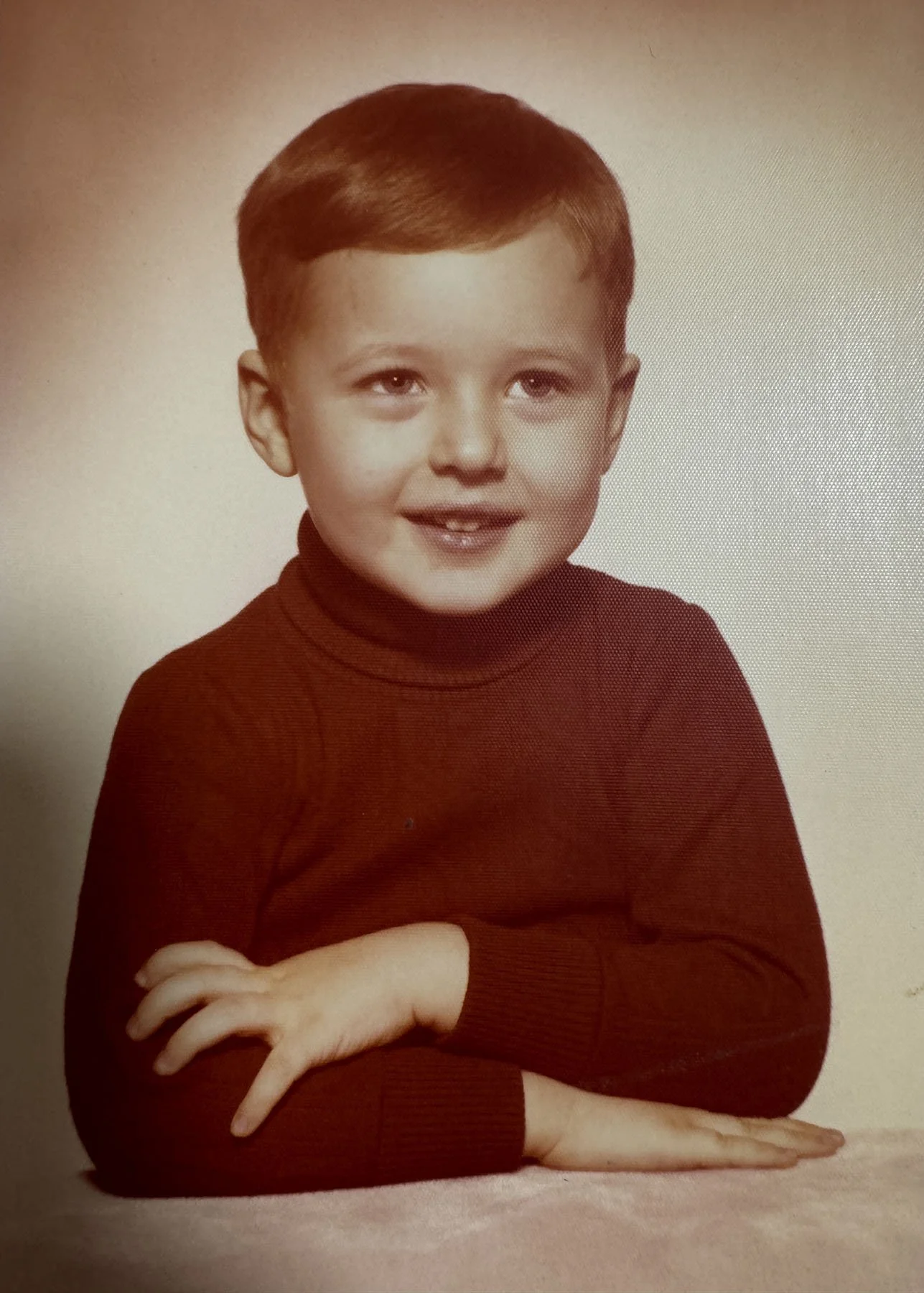
Pre-kindergarten Michael just discovering his lifelong love of learning, reading, and curiosity.
